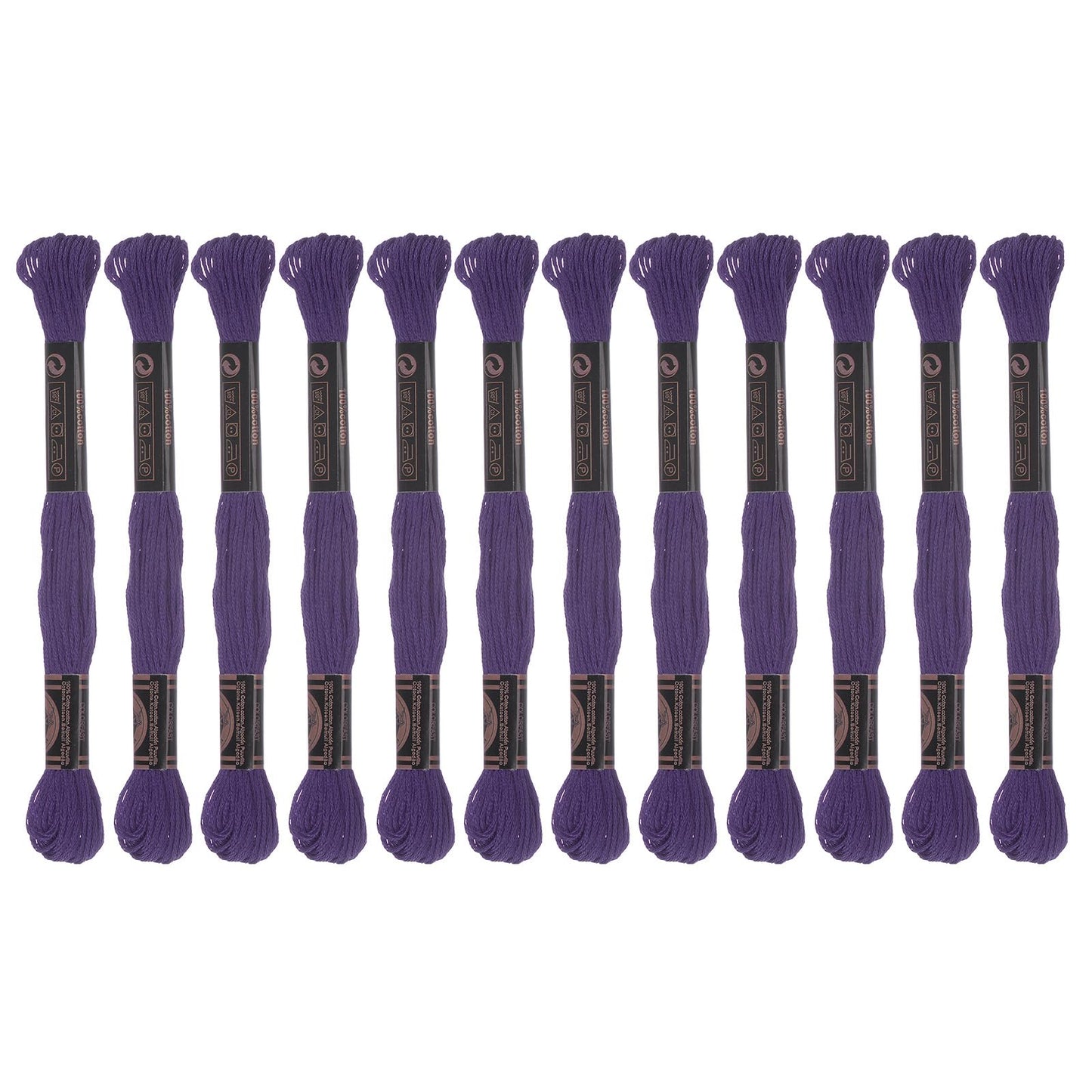
Egyptian long-staple cotton plants grow in the rich silt of the Nile where the hot sun strengthens every single fiber for spinning.
Every 8 meter skein contains 6 individual plies that craftspeople separate to create thin lines or thick knots for friendship bracelets.
In the dyeing vats, workers immerse the cotton in Medium Violet pigment to ensure the color reaches the center of every fiber.
While luxury brands like DMC undergo a chemical mercerization for shine, these generic skeins provide a soft matte finish for 1.57 dollars.
Yes, but
The soft cotton feels gentle on the skin during the creation of jewelry, but the thread might tangle if the artist pulls too fast.
Pressure test
Under the weight of a heavy metal clamp, the thread stretches until the Egyptian cotton fibers finally part with a sharp snap.
The Secret Architecture of Twisted Strands
- The Z-twist in the yarn prevents the thread from unspooling when the needle travels through the tight holes of the fabric.
- Because the fibers exceed 30 millimeters, the thread leaves very little dust on the black cloth during the stitching process.
- Storage in a cedar chest protects the cotton from the tiny insects that enjoy eating natural fibers in the dark.
- Reviewers on retail sites mention the thread feels like silk between the fingers during long hours of sewing.
The Molecular Attraction of Violet Pigments to Cellulose
According to the Textile Research Journal, long-staple cotton offers more surface area for the dye molecules to latch onto during the immersion phase. Research from the Journal of Engineered Fibers and Fabrics shows that violet pigments bond with the cellulose through hydrogen atoms. These bonds remain stable as long as the artist avoids boiling water or harsh bleach during the cleaning phase.
The Abundance of 12 Individual Skeins
With 96 total meters of thread in a single package, a young artist can create dozens of bracelets for every friend in school.